New Airline Policies on Rechargeable Batteries — What You Need to Know
Airlines around the world are updating their policies on rechargeable batteries — particularly lithium-ion batteries — due to increased safety concerns. Major carriers such as the Lufthansa Group (including Lufthansa, Swiss, Austrian, Eurowings and others) have introduced stricter power bank and battery rules, which have begun rolling out across global flight networks in 2026.
These changes are part of broader efforts by aviation authorities and airlines to reduce fire risks associated with lithium batteries — a critical safety priority for both passengers and crew.
What’s Changing?
Here’s a snapshot of the most recent industry developments affecting rechargeable batteries:
- New EU-wide restrictions: Lufthansa Group carriers have banned the use and charging of portable power banks aboard flights starting January 15, 2026. Passengers may carry a limited number of power banks (typically a maximum of two), which must be stored in carry-on luggage but may not be charged in-flight.
- Global trend: Airlines such as Emirates, Qantas, Cathay Pacific, and others are also tightening how portable chargers and lithium batteries are handled, often banning in-flight usage or limiting quantities.
- Regulatory updates: The International Air Transport Association (IATA) and the United Nations’ UN 38.3 dangerous goods standards have introduced new requirements for lithium batteries in air transport, such as mandatory state-of-charge limits, which must be followed in cargo and by passengers.
- Safety driven: Recent fire incidents involving lithium batteries (including power bank thermal runaway events) have accelerated these rules and industry enforcement.
Airline Rules Still Apply to Lithium Batteries
Across most carriers and regulatory bodies:
- Batteries cannot be stored in checked luggage.
- Devices with batteries over 160 Wh are generally prohibited unless part of approved equipment.
- Batteries between 100 – 160 Wh generally require airline approval.
- Spare batteries must be individually protected to prevent short circuits.
What This Means for Medical Repatriation Flights
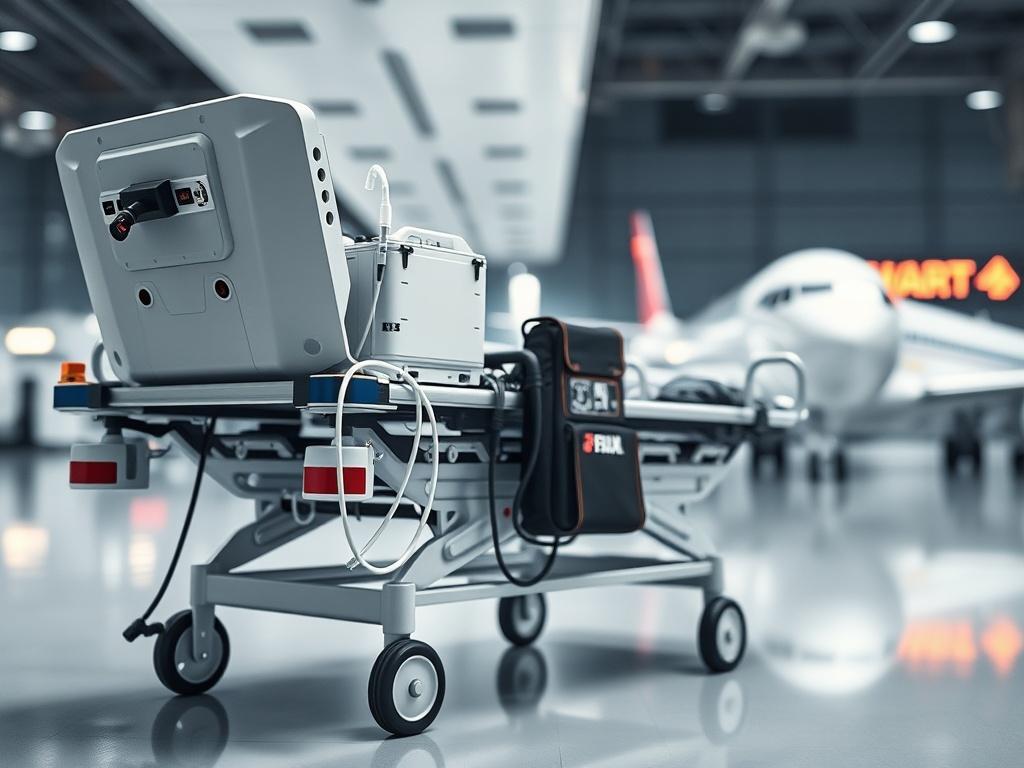
For many of our clients, rechargeable batteries power essential medical equipment carried during long-haul flights — including ventilators, infusion pumps, CPAP/BiPAP devices, oxygen concentrators and other life-sustaining devices.
While airline battery restrictions sound alarming, here’s what you need to know:
1. Medical Equipment Is Treated Differently
Most airlines and regulatory authorities exempt medically necessary equipment from power bank bans when proper documentation is provided. This means that batteries required to operate medical devices can still be carried and used on board, subject to advance approval and declaration.
2. Advance Notification Protects Smooth Travel
When booking a medical repatriation flight with AD Medical Air Assist, we handle the pre-flight coordination with the airline — including all necessary approvals for medical batteries and equipment.
We ensure:
- All battery-powered medical devices are documented
- Airline and cabin crew are notified far in advance
- Proper storage plans are confirmed before departure
3. Preparation for Long-Haul Flights
Long-haul journeys mean lengthy in-flight time for life-support gear. Our team works to pre-secure power allowances and can suggest:
- Backup batteries approved by the airline
- External power plans (e.g., aircraft mains or dedicated medical outlets)
- Extra capacity within safety standards
AD Medical Air Assist — Still the UK’s #1 Trusted Medical Repatriation Partner
We want to reassure all our clients and partners that these airline policy updates — while important — will not reduce the quality or reliability of the service we provide.
At AD Medical Air Assist:
- We stay ahead of regulatory changes and airline policies
- Our care teams work with airlines on your behalf
- Your medical and safety needs are always prioritized
Our commitment to excellence remains unwavering — we continue to be the UK’s most trusted medical repatriation company.
Need Help or Have Questions?
If you or your loved ones are planning a medical repatriation flight, or if you have any concerns about rechargeable batteries and equipment on board:
Contact us anytime — we’re standing by to help.
📧 Email: enquiries@admedicalairassist.co.uk
📞 Phone: +4403330150226
🌐 Website: www.admedicalairassist.co.uk